Friday, May 23, 2014

Renewing of the Mind

We spent the evening out on the water tonight.  This is our third trip around the area with our new boats - actually loaner boats while we wait for the new ones to come in.  There is something transforming about spending time in silence gliding over the water's surface, meeting and surprising birds, experiencing the water from another perspective.  The view from on the lake is much different, giving us the opportunity to see things normally hidden, expanding our understanding of the natural world.
In Sunday's sermon, the pastor defined miracles as something that happens outside of our reality.  They are defined, he said, by some external action that suspends the natural physical laws of the universe.  I would add that there are other laws that we don't normally include, things we often don't see from our limit shoreline perspective.  These expanded laws of nature extend into other spiritual realm, beyond into our imagination and capacity to see deeper.  They are like elements in the last row of the periodic table that keep getting added to as more discoveries are made, suggesting endless expansion if we only look.
The weakness of that analogy is that the process of scientific discovery will not uncover all of the laws at work that impact our lives.  Spiritual laws are beyond the scientific method of empirical analysis.  But they are there.  There is a border area, where the physical and the spiritual intersect and overlap.  It is discovered by internal processes, but also has roots in the physical world.  This is what I look for when out hiking or kayaking.  Others have called these "thin places", where the separation of heaven from earth is very thin and God's presence and glory can be experienced.  It's popularly known as a Celtic idea, mistaken for paganism often, but experiencing God defies those kinds of limited human definitions.
So we kayak, looking for the Presence that will restore us and transform us by the renewing of our minds.
This weekend we went to Park Lake, a small lake near East Lansing.  It sits right next to I-69 on its northern shore, only separated from the highway by a row of trees and the road that rims the lake.  The boat launch is on the northern edge, and once out into the lake, it is mostly shallow near the edges.  The lily pads have pushed buds up out of the water, promising more beauty to come.  The lake bottom is visible in these areas, covered with weeds.  There is the usual collection of cottagy-houses and expensive new houses, crammed on small parcels of land, all extending their hands toward the water.  On the south side of the lake, further away, there is an entirely different area.  Away from the sounds of humanity's strife provided by the highway, there is a marshy grassland area full of birds.  As we neared this area, the sounds of the birds took over, and extended peace and solitude our way.  A pair of sandhill cranes stood on a small tuft of land, and as I got closer to these huge birds, I noticed their fuzzy chick between them.  He was already a good foot tall.  Thinking that I didn't want my eyes peck out by upset parents, I quickly turned the boat and paddled away.  The birds barely regarded me, noted my presence, but did not especially care that I was there.  Hovering silently over the surface of the water in the boat allows for easier integration into the peaceful surroundings.
This was a refuge after a busy, hectic day with family - a beautiful retreat into peace.  "Do not be conformed to this world, but be transformed by the renewing of your mind, that you may prove what is that good and acceptable and perfect will of God."  Romans 12:2  Today, as always, God wills peace for our souls, and tonight we paddled out to meet it.

Monday, April 14, 2014

Baptism and the Triumphal Entry: Palm Sunday 2014

The earth was without form, and void; and darkness was on the face of the deep. And the Spirit of God was hovering over the face of the waters.  Genesis 1:2

This week was Palm Sunday, celebrating Christ entering Jerusalem for Holy week.  As a bonus, there were also three baptisms in the church we attended.  There is something about the sacraments on display that resonate with me, a certain energy that is present when the eternal touches the ordinary.  The sacraments of the Church are the visible signs of the unseen graces.  Of all the sacraments, baptism is my favorite, for reasons many of you will know.

This Sunday, since we have been visiting new churches in our area, I wasn't expecting the baptisms and was completely unarmed with no tissues.  This church is a new start-up congregation inhabiting what was once a Baptist sanctuary, and they were able to do the full submersion in all of its glory.  On ordinary Sundays, the dunk tank isn't visible, being partially covered by a curtain.  Today the curtain was off, revealing a low glass wall that allowed view into the first twelve inches or so of the water.  The interface between the water in the tank and the air above was a thin straight line. 

After the worship and the sermon, attention turned to the main event.  One by one, the associate pastor entered the tank with the souls-in-waiting, waiting for their turn to be marked by the Holy Spirit.  As they entered, the line on the glass marking the boundary between the water and air danced with waves.  Each bapitizee was given a moment to share their testimony; moving stories of rebellion, obedience, and gratitude; all stories of tearful grace.  The first was a Sunday school teacher; her kindergarten class seated the front pew as she renewed the baptismal vows made by her parents when she was an infant.  As the pastor pronounced her baptized in the name of the Father, Son and Holy Spirit; he leaned her backwards into the water.  Under the water only briefly, that moment of symbolic death quickly gave way to the resurfacing explosion into life.  The congregation joined and erupted in cheers.

The second young man gave a recounting of his rebellion and the love of a step father that brought him back into the family of God.  Again, the line played on the glass, emphasizing what is between the two worlds of water and air.  This time I saw something different.  The Spirit of God was hovering over the face of the waters, like a buoyant oil floating just above.  As the pastor brought the young man back out of the water, the Spirit clung to him all over.  Again, the explosion from death into life.  Again, the explosion of cheers and worship from the congregation. 

And at the third baptism, the Spirit now visible and hovering, a woman came into the tank with her husband who tenderly and tearfully performed her baptism.  As the Spirit is present at these gatherings, it is usually an energy that ramps up, and was so in this case.  There was no response possible except for shouts of joy and tears that came on their own accord. 

The sermon that morning had been about the triumphal entry of Christ into Jerusalem on Palm Sunday.  Since the crowds did not understand His purpose they heralded Him as King of the Jews, anticipating a military coup to throw off the Romans.  Instead of taking in their misunderstanding cheers that would shortly yield to cries for crucifixion, Jesus sat on the back of the donkey, viewed the city and wept with deep compassion for what was to come for Jerusalem. 

In our small world, in our small corner of the Church, we cheered for the triumphal entry of the Spirit into the lives of three people -lives that are now eternally sealed and marked for God.  The tears were in response to the very nearness of the Spirit, through the words of the testimonies, the loving actions of those performing the baptisms, and the crackling energy of the Spirit filling the room.   In these moments, the sacraments that are the visible signs of the unseen graces provide a view into things eternal - the truth found in the ineffable mysteries.  A brush with the eternal, a triumphal entry. 

Sunday, May 5, 2013

Paying it Forward 1 of 5

MSU College of Natural Science Graduation Day Speech

The view from my prime spot on the podium during Spring Commencement
For the full panoramic view, see the short video at the end of this post!
This year, Dave Isbell of MSU Alumni Career Services has challenged Spartans to "pay it forward" by helping other Spartans.  To seal the deal, he offered kick off the good deeds by sending Green and White surprise packages to the first five Spartans to respond to his invitation.  I was the first to sign on, and am in process of helping my Brothers and Sisters-in-Sparty!

How many does this count for Dave?
As my first assignment in paying forward my gift from Dave Isbell via Spartans Helping Spartans, I accepted the offer to speak at the College of Natural Science Spring Commencement.  I represented the MSU CNS Alumni Association Board of Directors, and had the privilege of giving a short address right before the turning of the tassels for approximately 700 new alumnus!  It was an exciting event - ok a bit horrifying too, being by far the largest group I have ever spoken too.  The Breslin Center was full of thousands of cheering, happy grads including families and friends.  I got a chance to meet some of the amazing faculty and share the stage with some real superstars.  The people of MSU are by far the friendliest, most helpful, down-to-earth folks I've ever met.  This was an experience I'll never forget.  I can't remember the last time I sang both the fight song and MSU Shadows, and I still knew the words.  Since I did not throw up, trip, or pass out, I'll call it a win!  And Dave, just to show you what a good sport I am, I will only count this as "one".

Since I'm sure you are dying to know what I said to the new grads, here it is:


It is an honor to be speaking to you today representing your Michigan State University Alumni Association.  On behalf of the Board of Directors for the MSU CNS AA, congratulations on your achievement.  We truly appreciate the hard work and sacrifice that has gone into this.
            In a few moments, you will turn your tassels then walk across the stage and hear your name called – a moment you have been waiting for, for years, some of you for more than four years! And now you are here.   Whether or not you believe something magical happens today  when you turn your tassels, at minimum ceremonies mark the important milestones in our lives.   At best, they carry the spark of the Divine and symbolize much greater things.  I believe something magical will happen – you will become something new, a Spartan Alumnus. 
            With that comes great privilege and responsibility.  Your diploma will open doors, and what is beyond those doors is yours to determine. As you carry the Spartan name and reputation out into the world, you carry with you the multitude of alumni worldwide, the current students, and those yet to come.
            When I thought about what I wanted to say to you today, I thought back to my own graduation day from CNS in 1992.  The speaker that day told to watch out for other Spartans in the world – it was our responsibility to do so!  Especially professionally, whenever you have the opportunity to support, mentor, advocate for or help another Spartan, do it.   It is what makes us great.
            The MSU AA world wide has a strong network of Spartans helping Spartans, and is one of the truly great things you have yet to discover about our school.  You may have come here for academics and the culture, but you will leave with something much more than your diploma.  You are part of the Spartan Nation and you have a network for life. 
            Ten or twenty years from now, the Alumni Association will be here to help you connect.  No matter where you go or how much time passes, you can always come back and participate.  The Alumni Association has a lot of great resources for any stage of your career, and local chapters nation and world wide. 
Peace and blessings on your journey!  Go Green!


Monday, April 22, 2013

Paying it Forward


Back in January, there was some social media campaign bouncing around Facebook that was calling for people to “pay it forward”.  There was some twist on the typical meaning, I can’t quite remember what.  It was one of those chain-letter-ish things that works to guilt people into doing nice things.  I am relatively immune to guilt trips, unless they are competitive and there are prizes!  Then I am all in.  At the same time, my MSU Alumni Association career coach, Dave Isbell, picked up on this theme and enhanced it Sparty-style.  On the Spartans Helping Spartans blog,  the challenge was for Spartan Alumni to pay it forward by doing good things for other Spartans.  Specifically, the first five people to comment on his post would be included in a year long effort to do a separate good deed for five other Spartans.   In return, Dave would send out “something green and white” as a paying-it-forward kick off of sorts. 

That was January.  Now in April my package arrived, full of all sorts of goodies from the MSUAA prize closet, including a hand written reminder of the contract.  Well Dave, I have not forgotten!  For the last few months, I have been noodling on all the good things that are within my power to do for other Spartans in the world. 
Not hard, since from the day I graduated, the message from MSU has been to watch out for other alumni and give them a hand whenever possible, especially professionally.  It was preached on graduation day, from then-MSU President John DiBiaggo.   Being helped by another alumnae was how I got my first job, actually.  In the terrible job market of 1992, another Spartan advocated for me at Butterworth Hospital; a complete stranger!  Out of a large pool of applicants, I was singled out to become a lab tech at the fertility clinic.  Now, of course I got the job because of all my great qualities and the fact that I nailed the interview (of course!), but it is always good to have someone on the inside looking out for you.  Since then, I have always pulled for a fellow alumnus when I have had the chance.

Now I have five chances – five ways to make a difference for another Spartan this year.  How will I spend it?  I have some surprises in store for you Dave, and I will be sharing them here as I tick them off my list.  To get a head start, just incase I run out of time at the end of the year, I gave one of the goodies from the package to my son Jacob, who will be attending MSU next year as a freshman.  Is that cheating? Also Dave, there is that coffee date that you and I still have pending, and if I buy the coffee, maybe that could be another spare good deed for insurance….

Monday, September 10, 2012

Forgive Us Our Trespasses


There is one beach, among all the Lake Michigan beaches I know, that holds special spiritual sway with me.  So much that I have not visited there in nearly twenty years, for fear that it has changed.  It is the property that was once the church camp I went to as a kid, Pilgrim Haven near South Haven, Michigan.  Church camp was a special experience for me, a time of testing independence away from my family.  Not only independence in living apart from my parents for a week, but also spiritual independence from them and my church family.  It was a time to really stand on my own, being challenged by the camp counselors to think of myself as a spiritual individual; but in an environment of like minded people.  For a ten year old that is a pretty safe test, unlike the spiritual test of attending Michigan State University as an eighteen year old.  But that is a whole nother story.

Pilgrim Haven Camp was on Lake Michigan front property, extremely valuable real estate, a beautiful spot.  There were two rows of wooden cabins that ran perpendicular to the beach, set back slightly behind a row of trees on a low bluff. At night, when it had been stormy, we slept to the sound of waves crashing on the beach.  When it was foggy, we could hear the fog horn from the South Haven light house nearby.  Both were very comforting sounds, adding to the peace that was easy there.  Pilgrim Haven was a good name. 

It was not the first time I heard God’s voice, but so far it was the loudest.  At camp, part of the daily routine included evening Vespers, a worship service that wrapped up the events of the day.  Instead of doing this indoors in the main lodge, Vespers were held on a high bluff overlooking the lake, at sunset. We sat on benches made of wooden boards perched on logs, and faced the waterfront where there was a rugged wooden cross near the edge of the bluff.  This is where I learned to worship God in sacred outdoor spaces, seeing Him in the colors of the sky and the endless water that seemed to stretch on eternally.  God called His creation “good”, and here that truth was unmistakable.    

When I was a teenager in the ‘80s, the United Church of Christ closed the camp and sold the property.  At the time, it seemed like just another change associated with growing up.  My BFF/co-camper Ginger and I learned about it while at another church camp up North that summer.  Immediately I felt the loss and wanted to return.  A few years later, my husband and I went there while visiting his aunt who lived nearby.  It was the early ‘90s then and most of the buildings had been removed.  The high bluff was gone; it had been eroded away by the wave action during the period of high lakewater, when many cottages were lost to the lake all along the shoreline.  The property was overgrown a bit, but I could still easily make out all the former locations of the cabins, buildings, and play areas. 

The changes I saw were pointing toward inevitable development.  Sadly, much of the shoreline, particularly in Southern Michigan, is overdeveloped.  This has made me move Northward in my beach visits and has now pushed me all the way up to the Sleeping Bear Dunes National Shoreline, where the sacred space is preserved.  For years, thirty years now actually, I have assumed that my whole beloved Pilgrim Haven had become a condo development, closed off forever.  I couldn’t even look. 

This spring, I happened to Google the camp, looking for better pictures of the high bluff worship area.  I was shocked to find that the woman who bought the land held it undeveloped, and had recently donated it to be made into a park.  Amazing!  I emailed the organization to ask more about it; what’s happening now and when can I go?!  The answer was that it is still in process, and there are no-trespassing signs and fences currently while plans are made.  Hmm.  Immediately I knew that there would be no fences on the lakefront.  Michigan law has established public access to all beaches, up to the high water line.  And while I was there, maybe I could take a peek (or walk) inland.  Maybe.  Camp is an hour and a half away, in a direction I usually don’t travel.  Until this weekend. 

I was heading back from a business trip to Chicago Saturday near sunset.  As I got closer to the highway exit, I felt a pull or a call to go.  Sunset!  But could I find it again?  As the sun got closer to the horizon, I took the exit and drove around on memory and instinct, looking for the right spot.  Would I find and recognize it now, among all the expensive new houses?  The first road I followed to the lakeshore came out close, but not the right spot.  I stopped the car and got out anyway, and the sound filled my ears.  The lake was churning, large waves crashing crashing crashing on the beach.  For all the years I have been to beaches on Lake Michigan, this sound was unique.  I hadn’t heard it anywhere else the exact same way, the way I heard it while I slept in my cabin.  It was a greeting that made my heart leap, the Spirit inside me jumping with joy.  To the north, I could see the South Haven light house.  There it was!  I must be close.  Determined to do better, I hopped back in the car, and took off. 

As darkness was getting closer, and the sun moving toward the eternal line of the horizon, I zoomed through the neighborhoods.  Then I caught sight of the right street, turned the corner, and again caught full view of the lake down the road that ended above the beach.  Parking in the near darkness of deep twilight, opening the car door, the sound returned, but with it this time was the smell.  A mix of pine and other trees, a smell that brought back everything in my memory of this place. There was a line of tall trees along the road, with a fence and the expected No Trespassing signs.  I went quickly to the beach and, regrettably wearing high heels and a skirt, climbed down the slope. 

Home at last!  My soul rejoiced and connected to the place in an indescribable way.  As much as I love words, there were no words for this moment.  The water was deep blue with the clouds echoing the color, while the sky was reds and oranges, changing by the minute.  The waves rolled in, crashing with the sound of God’s voice again.  Saying the same thing He said when I was ten; welcoming me and inviting me to follow, like an outstretched hand.  How could I refuse? 

Turning back toward the land, I looked at my camp.  Should I go?  How could I possibly be trespassing when my soul owns a piece of this property?  This was certainly not a violation of the intention of the woman who protected and donated the land.  Climbing up and in, I followed a small trail made by other pilgrims, careful to not disturb the dune grass.  Once in past the trees, it was darker and cooler.  The spaces were still open in the same ways, but clearly haunted by the oldest trees and their memories.  I was only able to stay there a few minutes, this time, as it was getting pretty dark. 

I went back the way I had come, staying as long as light would allow on the beach, then climbed back up to the road.  As I sat in my car, with the door open, I dumped the sand out of my dress shoes onto the pavement.  Any day where I have to clean beach sand off my feet before driving is a good day.  And God said it was Good. 

Saturday, September 1, 2012

Rocks


I have a rock collection.  It is made up of the smooth beach rocks I have picked up over the years on the shores of Lake Michigan.  Every time I am there praying, I walk and pick up a rock as a reminder of that prayer and of my connection to God.  The rocks are in my car, in all of my purses, stacked in my bathroom, and stacked on my desk at work.  They line window ledges in my house and serve as small mementos to rub and hold until they are polished by my hands.  Or there are the larger ones that are palm sized; they are a grounding tool.  Their cool solidity serves as a reminder of what is real when things get unreal.  Different locations on the shore contain different shaped rocks, produced by the unique wave action and water conditions present.  The rocks are all rounded by tumbling in the sand below the water; some are perfectly round and they have varying degrees of flatness.  Some are so flat they would be perfect skipping stones if I could truly let go of them and send them off across the water. But I hang onto my prayers.  

The Lake Michigan shoreline is a sacred space for me, and has been since I was a kid at church camp, worshipping outdoors on a bluff overlooking the Big Lake.  Seeing water with no land on the other side, the endless possibilities, stirs the imagination and suggests the Infinite.  So, that’s where I go to meet God.  Never fails, He’s always there, and I’m always praying. 

The lake always speaks differently, sometimes the waves are gentle and quiet, other times crashing.  The color of the water is magical, changing from one visit to the next.  I always come away from time at the shore with a renewed mind, having listened to the eternal rhythm of God found in all that is natural.  I try to teach my children to listen too.  On a hike through a state park this summer, we stopped to listen to the gentle sounds of a small stream, moving over rocks.  I asked them what the stream was saying.  Listening carefully, we thought it was saying, “stop and rest, peace.”  Later I asked them "If a stream can say that, what does Lake Michigan say?"  My daughter immediately answered, “Something Bigger.”

This connection has drawn me to the shore more and more in the last few years.  So much so that I began to volunteer with a nonprofit group that supports the Sleeping Bear Dunes National Lakeshore in Northern Michigan.  Now I have a wonderful excuse to drive the three plus hours there year round, allowing God to work on me through all of the seasons and see His good work even in the winter, when beach solitude reigns.  This quest has also drawn me to visit the wilderness of the Manitou islands of the Park, about twelve miles off the mainland.  The water there is crystal clear, and near the shore it reflects off the sandy bottom of the lake like a swimming pool.  Lake Michigan beaches to the south don’t have this clarity; it only intensifies the mystical effect. 

This year, in the midst of extraordinary personal struggles, I traveled again to the North Manitou Island, this time with my group, Preserve Historic Sleeping Bear.  We continued a multi year restoration project on a historic cottage, and the companionship and physical labor was healing and soothing.  In my free moments, I spent time alone with God, either on the trails through the deep old forests or on the shoreline.  With the rocks, both physical and prayerful, I watched the sunrise every morning. 

Where I live in Michigan, with Lake Michigan to the West, the sun always sets over the lake, dropping brilliantly into the line where the water meets the sky.  This time, on this trip, from the Manitou Island looking in the other direction, the sun rose over Lake Michigan, a surreal sight on any day.  Although I could still clearly see the mainland to the East, the sun came up far enough to the Northeast that it was rising out of the water.  Sunrise is the beginning of the day, and since God’s mercies are new every morning, I love being there when the mercy bank is reset for me.  Lord knows I need it.

So on the first morning as I waited in the twilight on a sandy bank right near the water, I was sitting in the cool sand, as yet to be heated by the sun, among the rocks.  The waves lapped gently on the shore, repeating a phrase that can only be heard when listening mindfully.  I prayed for God to take care of me and my family, to show me His direction, to help me face my problems.  Would He?  Silence.  As the sun broke over the watery smooth horizon, and the glory of the Lord shown fully, it was clear that the prayer, the questions, were wrong.  God is so good, so holy, so beautiful; it is impossible for Him not to take care of me.  It would be impossible for me to fall away from or beyond His care.  The response was so much larger and fuller than the question, completely eclipsing it.  As I looked around me, at the rocks covering the sandy beach and slope where I sat, they were no longer the prayers, they became the answers.  They became Something Bigger.  After the trip, as I return home to my world with the rocks in all the rooms of my house, my car, my desk – I am surrounded by God's answers, and I always have been.


Wednesday, March 21, 2012

Created on Purpose

http://uuhsc.utah.edu/andrology/photo_gallery.html 
(A reflection on my work as an embryologist, from 2006.)

Your eyes saw my substance, being yet unformed
And in Your book they all were written
The days fashioned for me, when as yet there were none of them.
Psalm 139:16 NKJ

     There is a purpose instilled in each of us at the beginning. Actually before our beginning, known by God alone, until our physical lives are set in motion and our purpose begins to be manifested. But when I refer to the beginning, it is the beginning of our physical being; when egg meets sperm in a narrow fallopian tube. Some beginnings don't start there though; they start in a petri dish, where life is aided by a medical team. Couples hoping to be parents, but unable to have children on their own, turn to a fertility clinic to deliver them from childlessness. Among a team of many, I am an embryologist; a lab technician trained in the nurture of early human life.
     In the lab where I work, eggs and sperm are combined to produce embryos for infertile couples. By the time patients get to that stage in their medical odyssey, they have endured months, if not years, of invasive, embarrassing, expensive treatments. Each month is valuable; one less month until the wife’s menopause, one more month of empty arms among her circle of friends with babies who are growing so fast. Each month is another chance at pregnancy. The menstrual cycle is meant to launch a new life; the new life of the baby, the new life as parents, the newness of all the family relationships viewed through the lens of the child. If only this month it would work, then they could finally put this nightmare behind them and move on into the future, never looking back. The whole clinic, from the medical director on down to the clerical staff, knows the desperation and the hope. It permeates the air. Although the whole medical team participates during treatment, creation of life is not achieved by us. It is a divine yet natural process that we can only aid, not force.
      During the course of the medical treatment, the fertilized eggs become embryos. The fertility drugs given have enhanced the woman’s egg production, so a single month’s cycle could yield between 6 to 24 embryos. All embryos are infinitely precious to the couple. Each fertilized egg is a real baby to them; they imagine a personality, a soul, a sun-browned laughing child in their back yard. They each have that potential, but they can't all be transferred back safely to the woman’s body at one time. So the lab technician looks the embryos over carefully, grades them, and unsentimentally selects the best. Two days after the egg retrieval, two to four embryos are loaded into a thin catheter to be returned to the patient’s uterus.
     At this point, the extra embryos have now become a by-product of a medical treatment. Because of their much debated human status, they must be dealt with in an ethical manner. To our clinic means that any embryo of average quality or better gets cryopreserved, or frozen. The freezing process involves chemical dehydration to prevent the cells from bursting (as the water in them expands), loading them into small plastic containers and very slowly cooling them. Lastly, they are kept frozen in a storage tank of liquid nitrogen at the clinic until the couple comes back for them.
     Should the excess have been produced in the first place? The medical team has limited control over the number of embryos produced without sacrificing successful pregnancy outcome. For example, if three eggs were used for fertilization, some may not have fertilized at all or been of good quality, leaving little or nothing to put back in the uterus. Complete fertilization failure, probably the worst disappointment, results in no embryo transfer and a cancelled cycle. Fertilizing more eggs than are needed directly improves the likelihood of pregnancy by increasing the pool of embryos to choose from. Reducing the need for repeat treatment cycles is better for the patients financially and emotionally. Many patients are unable to withstand repeat failures, and seek aggressive treatment plans which maximize the number of embryos produced in each cycle. 
     At our clinic, around fifty five percent of the women get pregnant on their first try with this therapy. For those with frozen embryos, it means a long wait to be reunited with their mother, if ever. If she is pregnant, especially if there are multiple babies expected, she won't come back for her embryos for at least two years. That is, if she even wants more children. Now the couple must consider their choices as to what to do with the excess embryos.
     The patients are offered four choices. Embryos can be stored indefinitely, donated to another infertile couple, donated to a research lab, or destroyed. Not only is their fate decided, but also the reality of what they are. If storage is continued, they are still the promise of future children. If they are donated to another couple, they are the promise of future children plus a beautiful and unselfish gift. The option of donation to a research lab makes the embryos an unselfish gift also, but they lose their humanity, becoming a biological specimen of curiosity. To choose to destroy them can also deny their humanity; or be viewed as an act of respect; letting them go instead of holding them in frozen storage.
     Many embryos have waited frozen more than a decade with couples unable to return for them. Some couples have finished their families now, with enough children to fill their lives. Others have divorced, exhausted their ability to pay for the expensive treatments, or are emotionally unable to face the strain of continued therapy.
     The embryos wait. The lab begins billing a hefty quarterly storage fee. The tanks are full; more tanks are purchased, taking up considerable space in the clinic. The abundant blessing the lab has helped produce now becomes a curse. Many patients continue to pay the storage fee out of obligation, but are unsure of what to do with their embryos. Some just don’t pay and their accounts go to a collections agency. Although these embryos are abandoned, the lab has no other option than continue storage. All these lives are still left waiting. In a decade or two, the patients will be physically too old to attempt a pregnancy. The billing defrays the storage cost for the lab, but more importantly also puts pressure on the couple to make a decision. “Don’t leave these here forever,” is the unwritten message.
     Now the embryos are a burden, once they were precious. Have the embryos themselves changed? No. They contain exactly the same physical and spiritual components as the day they were frozen. They remain unchanged; only our perception of them is different. Does our perception of life dictate truth? What happens next is the result of hard, tearful, sleepless choices made by people desperate to have children. Who defines what the embryos are? Is it the opinion of the parents, the medical staff, or society? Is it the courts of law, varying from state to state?
     There is a truth to each embryo that transcends all of these factors. How can it be a child one day, but garbage the next? It has no less human potential based on our thoughts toward it. All that is lacking is the willing womb. The biological purpose of embryos is to grow, divide and expand, eventually connecting to the uterus wall. Their God-created purpose is to become fully human, to be those smiling children in the yard. Making these hard choices about embryonic life has left us all weaker for it. The joy of a new baby is incomparable; it is the hope that drives us on. There are countless families that would not exist without medical assistance. So many lives have been positively impacted by the sheer miracle of life where there once was none.
     Do we go too far? Are we trying to act as God? Are we causing more harm than good? These are my own hard, tearful, sleepless questions. The benefit of working in the lab is being shielded from the most painful parts of the patients’ experience. Often it is easy to manage; retreating to the lab during the worst times, but gladly coming out when the families visit later to show off the babies.
     Recently though, a female patient of our office came in to claim and destroy her last frozen embryo. It had been more than ten years since the day that I had cryopreserved the small life, along with several other embryos of hers. This one embryo had been accidentally misplaced, floating in the liquid nitrogen tank in a sealed straw, separated from the rest. This one had been left behind when the others were thawed and transferred back to her uterus. When I finally located the errant straw and recaptured it, too much time had passed. The patient was no longer seeking treatment; actually she was unaware that we still had it, at first. Although she hadn't become pregnant, she stopped treatment; likely financially, physically or emotionally exhausted. Probably it was all three.
     She and her husband kept in contact with us. The storage fee had been waved due to their circumstance, since they had intended to thaw them all at the same time. For years they didn't come back; although checking in several times to review their options. One day not long ago, they did return, but only the woman came to the office. I had always refused to participate in the destruction of embryos; I had been promised by the doctor many years ago that our practice would never do it.
     The embryos don't belong to us though, and that promise didn't anticipate the overriding rights of the patients to direct an embryo’s fate at will. Instead we pass them over to the patients, still frozen - though quickly thawing, inside their tiny plastic container tucked in a brown paper lunch sack. "What should I do with this?" is often the question. I answer, "Some people bury them, some people throw them away, it's really up to you. You just can't dispose of it on the hospital's property." That is our standard answer, although it is somehow lacking. So as they turn to leave, it is the patients who ultimately are responsible for the act. Obviously the staff is an accessory to this, and I could never bring myself to pull them out of the deep freeze with the intent of destruction. Except this one time.
     This embryo felt like mine, I remembered the patients, their case, everything so vividly etched in my mind. Back then, we didn't see the volume of people we do today. Back then, I could hope and pray desperately for each of them, the embryos. I saw much more of the embryos than I ever did the patients. I knew them before they were; as eggs and sperm. Through the microscope I saw them first as fertilized eggs, then dividing into multicelled embryos. I'd be the last one to see them before they were transferred to the patient, or before they slipped into the treacherous slumber of cryopreservation. Not knowing if they'd survive the thaw, or the wishes of their parents.
     "It's been a long time" was all I could think to say, as we stood face to face. She agreed slowly, this exchange containing more than the words spoken. She explained to me, as though I needed to know (which I did) that she was ok. She had just completed the adoption of two beautiful children, it had been more than a two year process while they foster-parented them. The other embryologist brought out the tank, and her brown bag was prepared. With small smiles and tears in our eyes, we parted she and I. This embryo, this last left behind, but not forgotten human mass of cells, had fulfilled its purpose that day. It had been her vessel of hope; which on that day, seemed like quite enough.

Monday, March 12, 2012

Jesus Clears the Temple


As the lectionary this week focused on Jesus clearing the temple of the merchants, it brought this story to my mind.  Based on real events, it is an experimental piece, the beginning of a much longer story, still being lived and written.

Shanna was a middle child, although that did not completely define her, it came close.  Even before her younger sister was born, she already felt like a middle child.  Now at the age of seven, with a new baby in the house, it was a fact.  Shanna was like the last thing left over on a to-do list; the one that never quite gets finished at the end of the day.  She learned to get by, pretending she didn't really mind being overlooked.  She might as well not mind, since there was nothing she could do about it anyway.    
Shanna’s older sibling was a sister, Cassie, who split her time between bossing Shanna around and ignoring her.  With less than a two year advantage, Cassie made the best of her position as the first child.
Their parents didn’t go out a lot, but when they did it was always exciting to see what babysitter would come.  Sometimes it was Great-grandma, who was very stern and strict.  A tough old lady who had raised her share of children, she was not about to put up with anything.  As the religious matriarch, she knew her Bible.  She had scripture all around her house, from handwritten quotes to needlework samplers.  She was, however, a bit short on the love and affection.  Of course, watching three children under the age of nine could do that to anyone. 
Sometimes the sitter would be Shanna’s grandmother.  She was a mom of ten, with her last two children just a few years older than Shanna and her sisters.  Grandma was an odd mix of grandparent and mother, hard to define.  Being a single parent, she was also no-nonsense in her discipline and care giving.  Generally she gave the same impression as mom and dad, way too busy to notice a quiet little girl. 
When all the free babysitters were occupied, mom and dad would have to resort to hiring a teenager from church.  Shanna’s favorite was Beth, only fourteen herself; she was a lot of fun.  She would let Shanna and her big sister Cassie build forts out of the sofa cushions and stay up late, sometimes until their parents came home.  Of course the baby had to go to bed early.  That was the best part about Beth; she didn’t give all the attention to the baby.  That is what everyone else seemed to do.
One time, Beth brought them candy.  Malted milk balls.  The girls usually only got those when they could convince mom to get them at the dime store downtown, which wasn’t often.  They would beg and beg and sometimes if they were really good or really lucky mom would give in.  Then the shopkeeper would get out his big silver scoop and weigh some on the scale, then pour them into a brown paper bag.  Of all the candies on display at the candy counter, those were what the girls wanted. 
The night that Beth came to baby sit and brought a brown bag of candy was special.  Since Beth was so young it was different than when an adult gave candy.  When an adult did, it was for a treat or a bribe for good behavior.  When Beth did it, it felt more like sharing.  Didn’t she want all the candy for herself?  Shanna knew that she herself wouldn’t want to share, especially malted milk balls, which were her favorite.  When eaten, the candy from Beth tasted the best, a free and unexpected gift. 
She would have never thought to relate this to Jesus in any way.  After all, Shanna was only a little girl.  Her entire knowledge of Jesus came from Sunday school lessons and watching Jesus of Nazareth on TV at Easter time.   The movie put pictures in her mind of what the stories told, making them more vivid and real to her.  She had nothing else until the dream came.
In the dream, she stood with Jesus in the Temple, at the edge of the courtyard.  It was right after His triumphant return to Jerusalem and right before his arrest and crucifixion.  There were crowds of people there for the Passover.  There was the commotion of the people and animals, as well as Roman guards.  It was warm and the smell of sweat and animals was strong.  Everyone was moving about with a purpose, there on business or holy pilgrimage.  Many were lined up to buy doves for their sacrifice.  The money changers were there also, doing a brisk business. 
No one noticed the two of them.  Jesus was in His long dusty off white robes, with His long hair and sandals.  Shanna was beside Him, with Him really.  He kneeled down to her.  Looking right into her eyes, He smile mischievously and said “watch this”.  He moved quickly through the crowds, grabbing the tables set up by the businessmen and dumping them over.  He went from one to another.  No one stopped Him or challenged Him.  Their first concern was grabbing their money.  Shouts erupted all over the courtyard.  The crowds also began to scoop up the scattered coins that were falling everywhere at their feet.  They hurried over broken tables and smashed scales reaching for what was not theirs. 
Jesus’ voice boomed over the chaos, “It is written,  My house shall be called a house of prayer, but you have made it a den of thieves!”
In the commotion, Jesus took a glass jar filled with malted milk balls off of one of the remaining tables.  He turned to Shanna, who had been at His side during this whole scene, and gave it to her.   His anger with the people had disappeared from his eyes.  He was now smiling again.  He looked directly into her eyes as she took the jar, its smooth sides feeling cool in her hands.  She looked down at it and marveled at the gift; free and unexpected.  As she then began to awaken, the sounds of the crowds faded.  The jar began to melt in her hands and as she tried to grasp it, she was only grasping the air.  In her own bed, she was sad to lose the candy that had only a moment before been so real. 
It was a connection she carried with her for life.  As childish as it may have sounded to others if she had told them, it was real to her.  The memory was so vivid that it was instantly recalled whenever she heard stories or sermons relating to the Temple and Passover.  She had been there, only for an instant, with her Jesus.  He had shown her that He was strong and a fighter, but most importantly that He had time to look her right in the eyes and see the desire of her soul.  When all around her were concerned with law and structure, He was showing her grace.  It was grace echoed in the gift of a teenage babysitter, who had time for noticing what others really needed. 

Friday, August 26, 2011

Last Picnic

In honor of Bridge Festival weekend, pulled from my archive

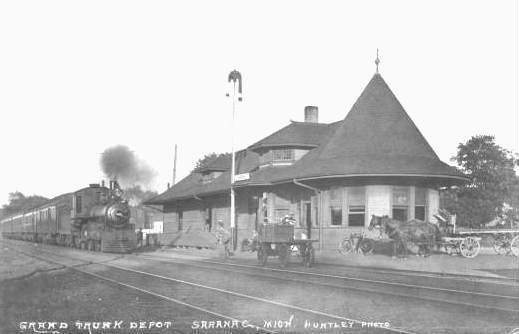
Although it was an oppressively hot day, Anne involuntarily shivered. Coming back to Saranac always had that effect on her. It was her hometown, a small town. So small that there was only a couple of four way stops. Not even a McDonalds. not that she would eat at one if it were there. Now that she was starting veterinary school at Michigan State University, she was one hundred percent vegetarian, not to mention all-organic.
The MacFarlane’s had lived in Saranac since the mid-1800’s, not too long after the first settlers came to this area of Michigan. Life was probably much the same now, new technology, but the same old families, ideas, and conversations. At least that’s how Anne saw it. Nothing new or exciting, just the same two blocks of downtown storefronts surrounded by neighborhoods of houses on three sides with the railroad tracks and The Grand River to the North. There was a post office, grocery store, a couple of gas stations and a bar. For the people who didn’t get their gossip and fill of drama at the bar, there were three churches to pick from.
Her family was more the church sort than the bar sort. Personally, Anne was a C. and E. Christian, Christmas and Easter were enough. Mostly this was to please her mom and an excuse to come home for family events. In a small town, family could be hard to define. When she was twelve, she had a crush on a boy in school that she later found out was a second cousin. That’s the way Saranac was, everyone was related to everyone else either by marriage or blood. God help the newcomer, because it was impossible to track how people were connected in this town, she thought as they walked along the tree lined street toward downtown. The shade felt good as the light breeze dried the sweat on her face and neck.
Anne had come back to town for an unusual event. The old deserted train depot was being moved about a half of a mile down the train tracks so it could be relocated near the center of town. The historical society (or hysterical society, as Anne liked to call them) had bought the old building and was planning on restoring it and opening it for tours. The society was made up of all the local red hatters and other old folks, looking for another excuse to organized themselves and preserve small town life for posterity. They were much like a church group, but without a central positive theme like religion or brotherly love, they often fell into bickering and disagreements. Apparently, they had pulled it together enough to get the community to rally behind this cause.
As they walked, they were joined by other crowds on the sidewalks. It seemed that the whole town was turning out, which would’ve been around two thousand people. Actually it was closer to two hundred. That was plenty enough, a pretty good showing in this heat.
Anne had a personal interest in architecture, and had always thought the depot was a beautiful example of an early 20th century train station. Besides, in high school she used to sneak into it with her friends and get drunk. They went in through loose boards covering the window. The depot was originally built on Depot Street, which was just a small one block loop off of Main Street, with only backyards facing it.
The current depot was built in 1907, after the old depot burned. In its prime, it was a social and economic hub, the crown jewel of this rural farming town. Over the decades, as auto travel became popular, attention was shifted away from the tracks and onto the roads. Since rail travel had declined, this had become an abandoned area, only occupied by dogs and bored teens. Since the last passenger train had stopped in the 1950’s, the depot was nearly forgotten. The grass grew long, and the depot was mostly hidden from view. Trains now pass by, headed for greater destinations.
Even as a teen, Anne had appreciated the woodwork and the style. The depot was painted a brick red, with white trim. It had a curved front to the building, which on the inside had a built in wood bench that followed the curve the whole way. From the outside, it had a black steeped peaked roof, that looked like a witch’s hat. Beyond the waiting room was a ticket counter and an office, followed by a cargo area. The whole building was about 120 feet long, but narrow enough to be transported down the tracks by a moving company.
On the sidewalk, she saw several people she knew, right away. Oh God. Not Joy. There was Joy Potter, a girl she graduated with. She was pushing a double stroller and approaching them on the sidewalk from a side street. Anne would have liked to keep walking, but her mom had already stopped.
“Anne?” she shrieked, “Anne MacFarlane! Where have you been?”
Anne put on her best fake smile and politely replied, “Joy, wow, look at you! Uh, school I guess, haven’t been around much” Her eyes flicked over the two squirming messy toddlers in the stroller. “And the boys, how old are they?”
“The twins will be three in the fall.”
Anne shivered again; glad she had missed that fate. She was quite happy to have escaped small town life and early motherhood. “I’ll bet they are a handful.”
“They keep me busy!” She smiled a little too optimistically and Anne could see the effort that was taking. Just then one of the boys whacked the other in the head with his sippy cup, creating just the diversion Anne needed to escape.
“Well see ya’ around!” Anne called out, sincerely hoping not to. Joy smiled and nodded in response, as she comforted the screaming child.
As her and her mother walked on, she wondered how many more encounters she would have like that today. Probably too many. Her mom was carrying on talking about all of the preparations that the historical society had made in planning the move. There were permits applied for, funds raised by bake sales and raffles, power lines to move, and of course the railroad tracks had to be closed to train traffic. Trains only came through town about twice a week anyway, so that was not a big loss.
As they turned the corner onto Bridge Street, she could see for the first time the full scope of the festival. There were craft booths, games for children, and a large metal hog roaster in front of the bar. People, all whom she knew, were milling around and chatting. T-shirts with the depot on them were a hot seller. Children were running around, playing with their prizes and balloons. There was a food booth, the portable kind from the county fair, which was selling corn dogs and cotton candy. A stage was set up, with the high school band director and his wife singing songs and playing guitars.
Her mom stopped to talk to some church women and Anne patiently waited. She spotted her ex-boyfriend’s mom and quickly looked the other way. She hadn’t seen Keith since the summer after graduation. It was an ugly breakup, and his mom had enjoyed it too much, said that Anne wasn’t the right kind girl. Actually that meant that Anne wasn’t Catholic. How that could possibly matter in a small town like this was beyond her. That ought to trigger some nightmares tonight, she thought as she sighed. At least Keith wasn’t here.
They came the final block toward the train tracks that crossed Bridge Street. Looking left down the tracks, she saw the depot. At 168,000 pounds, it was a surreal sight perched on giant I beams resting on axels. Large trucks were pulling it down the tracks toward the new lot, just off the edge to the North between the tracks and the river. Trees had been cut down on both sides to accommodate the extra machinery. The pace of movement was so slow that it was hard to tell if it was moving at all. It was expected to take seven hours to get it down the tracks, and then it would be moved off and set on a new foundation where it would forever guard the entrance into town. Right next to the sign “Welcome to Saranac, A friendly little village”.
She had always thought it should say “nosey little village”. Many times her parents got phone calls from other villagers to report on her activities. One time she got home to find her mom had gotten a call that Anne had pulled out of the store parking lot too quickly and squealed her tires. It had been no more than ten minutes before her mom had found out. That was what it was like growing up in a small town where everyone knew you, your parents, and everything about you.
This was where the epicenter of the party was. In the middle of it all, there was one picnic table straddling the train tracks. A few people had set their food and drinks on it. Anne blinked and scoffed at the same time. Wow, that seemed stupid. “What idiot would put a picnic table on the train tracks?”
“The same idiots who put the whole depot on the tracks?” Mom smiled her goofy smile. “There aren’t going to be any trains today, I told you.”
No sooner had she said the words, than they heard it. A long low whistle coming from the West. Down the tracks.
As people began to realize what was happening, chaos broke out. There was screaming and running; confusion as people were grabbing their children and running away from the area. The train couldn’t stop, there wasn’t enough track. The train cut through the picnic table like it wasn’t even there. As the broken wood was still flying into the grass, the engine smashed into the curved front end of the red depot. The screech of the breaks and the sound of splintering wood exploded into the air of the perfect summer day.


“So, do you want a corndog or what?” her mom asked, breaking through her daydream.
“Geez mom, sometimes I wonder if you know me at all!” she said shaking her head. “Let’s get cotton candy.”
God, these people are hard up for something to celebrate, she thought as they headed for the food booth. Then she smiled to herself realizing that she was one of them too. As much as she hated to admit it, sometimes it was good to belong.

Tuesday, May 3, 2011

An Open Letter to My Pastors for Mother's Day

As you know, I am a reproductive medicine healthcare worker, and spend a great deal of time thinking about, talking to, and writing about couples trying to conceive. This time of year especially, there is a lot of focus in the infertility community on the neglected needs of women, and the unintended insensitivity of those around them.
Next Sunday is Mother’s Day, a favorite on the calendar for celebrating the contributions of strong women to their families, communities and their churches. While recognition for mothers is a good and noble thing, there is another group of women in the church who are suffering incredibly on this day – infertile women. While in congregations around the country, mothers will be asked to stand to the applause of their church families, or glorified in romantic sermons about the value of these ladies, the infertile women will be silently dying inside. 1 in 8 couples experience infertility. Some of these represent women who have never had a baby, and others are experiencing secondary infertility, unable to repeat the miracle of carrying a child to term. They are often silent about their pain, avoiding the probing personal questions others ask, or pretending to delay motherhood. They feel alone, like no one understands what they are going through, and that they are somehow not “trying hard enough” or otherwise to blame for the lack of the blessing of children. The church is socially structured around families; husbands and wives with children, often with those not fitting into the mold left very much marginalized.
Mother’s Day is easily the most difficult day of year at church for women struggling to become pregnant, even more so than the parade of adorably dressed children at Easter, or the celebration of pregnancy and childbirth that is Christmas.
Why connect infertility and motherhood; why bring it up? Because it is your duty as clergy to minister to the poor in spirit, those suffering the most. I am not asking you to downplay or deny the magic of motherhood, instead please take a moment of the service that honors mothers to recognize the would-be mothers. Include them in the corporate prayer time, along with the members of the congregation needing healing. Offer them up and pray special blessing over them; they truly need it. Pray for the babies they have lost through miscarriages known only to them and God. Pray for patience in their wait, and for God to reveal Himself in the midst of their trial.
In the book of Samuel, we see Hannah, desperate to become a mother, praying and sobbing in the tabernacle. Eli the priest initially reacts by accusing her of being drunk, misunderstanding her entirely. How many Hannah’s are in your congregation now? Will you misunderstand them too?
Including and recognizing the infertile women in your church, will comfort them and reassure them that the Church is meant as a place for healing and support. Don’t be surprised if your thoughtful mention results in women opening up to you privately about their experiences. What an opportunity to seek out the lost and return their hearts to the fold. Women of faith will likely reach a crisis point with God over this issue, and need help sorting it out. What a significant ministry; a chance to make a big difference to a woman who may not know how to reconcile her pain with God’s grace.
However, she may not be there at all on Sunday, unable to face yet another year of sitting in her pew while what seems like every other woman in the church stands to the applause that honors the mothers. For her sake, and as a personal favor to me, please reach out to her.

Sunday, March 20, 2011

A Royal Wedding


Today I attended the wedding of Paul and Sherri, and it was beautiful for a lot of reasons: they looked amazing in their formalwear, it was a relaxed and joyous ceremony, the church was lovely, and it was a second wedding for both of them.

Since I am all girlie about weddings, and get especially excited about the clothes, I have to start there. Sherri’s dress was navy blue with a full ruffly skirt and silver trim on the bodice, paired with a white jacket. It was a stunning choice that looked terrific on her. You’d never guess she’s a mom of three. Paul is active military and wore his new full dress formal, right down to the ceremonial sword, that he later cut the wedding cake with (which by the way was even cooler than it sounds). Their families, making up a large portion of those in attendance, were wearing navy blue and black. Quite an attractive group.

The wedding was held at a small country chapel, which was warm and welcoming, filled with beautiful stained glass windows and wonderful energy. The friendly pastor and church secretary were there to greet the small group on this Thursday afternoon for the ceremony – St. Patrick’s Day, the date chosen as Paul says, because it’s always a party.

More than all else, it was a beautiful wedding because of grace. Today Paul and Sherri came before God and friends, two people putting brokenness behind to enter into a brand new covenant with each other. What an act of faith – to step out into that territory where they’ve been burned before. They knew each other in high school, even dated, but went separate ways then, only to circle back and find each other now, decades later. They each have three children, and have been on similar journeys that are now merging into one big Brady Bunch style happy beginning. What’s not to like about that story?

By grace we are saved through faith, as scripture says. Maybe sometimes we save one another with our love, and the faith to proceed even when we know what the worst outcome looks like because we’ve lived that nightmare before. But we choose to love anyway, with the faith that it will be worth it.

The pastor preached from the Song of Solomon, remarking on the love and adoration that the man and woman had for one another, which is echoed now in this love newly awakened. This is a covenant, she added, not a contract that the couple enters into. It is not a matter of each person getting their deserved end of the bargain, but something different. But what? That’s where she lost me, since I don’t honestly really understand marriage anymore, and can’t quite stretch my mind around the concept. Maybe someday. I was certainly listening and observing closely, trying to figure out this mystery. Like a magic trick that you can watch over and over and never quite solve, right before my eyes I saw the moment of transformation. From two individuals to a single, unified couple. How does God do that?

It was nice to be in a church again. It’s been several months for me, for reasons some of you will understand, others of you will think you understand, and I absolutely do not understand. Funny how you can go to the same church all your life, then one day find yourself on the outside looking in. I’d forgotten that it felt good to sit in a pew, hear a pastor preach, and pray with other people. It felt good to bless the newlywed couple and enjoy the overwhelmingly radiant love and grace. What could be more royal than that?

Friday, February 4, 2011

Virtual Real Estate


Last night he finally caught up with me: the aerial photography salesman. He’d been over a few days before and chatted up the kids (which is a no-no, by the way), and promised to return again. And so he did.

Now, I need to say right up front that I am generally a sucker for pictures of my farm, especially when they are from unique angles, like looking down from a plane. I did, in the past, buy one of these pictures, a 1952 aerial shot showing the farm during it’s operating years, compete with a full array of outbuildings that have now vanished into concrete foundation shapes that haunt the lawn. It was black and white, and they offered to colorize it anyway I liked. Well – I liked it black and white and bought the smaller version in the wooden frame. Yes, these pictures come fully framed and printed in some sort of permanent laminated form so incredibly durable that they can even withstand being directly spattered with bird poo. Not making that up, the salesman actually used that as a selling point. Who could argue with that? So, about ten years ago, I became the owner of a piece of history.

But do I really need a second one? This year’s salesman thinks so. The new shot is a view of my farm from the backside, taken last summer when the corn was in full bloom surrounding the property on three sides. It shows all the satisfying angles of my folk Victorian farm house, along with a pretty view of my flower beds. Proudly producing the large glossy sample of my wonderful 2 and ¾ acre remnant of a farm, he began extolling the features. It was a nice shot, other than all the flaws that make a house a home.

While the yard was nicely mowed and their was no junk cars in the barnyard (anymore), there was a lot of other metal odds and ends lying out that I was in the determined process of purging. My ex-husband's left behind junk. Eighteen years worth of obsessive compulsive trash gathering with a pick up truck doesn’t disappear overnight, and he certainly didn’t take it with him. When I shelled out the big bucks to begin to repair the barn two years ago, it was time to restore it's dignity in and out, so out the junk went. My poor barn, having suffered years and years of neglect by the oppressive ex, finally began down the road of restoration and healing.


Now my beautiful sweet barn, which got one side (and one half of the roof) remade into classic barn red, happens to have three sides of classic weathered white. This looks quite odd in the picture, especially since the colors in these aerial photos always seem to me to be a surreal abstraction of anything found in nature. The red side of the barn is crazy red and is the focal point of the picture. The green of the yard and corn fields is an amazing bright green, like after the largest thunderstorm imaginable has just passed and teased out all the chloroplasts in the plant fibers.

As I begin to notice and comment on the colors and the barn, the salesman hits his stride. Ah – he tells me – it can be fixed! I can easily change the colors in the picture, he brags. As a matter of fact, with the simple request on the order form, I can get the whole barn finished. All red, all done. Not even costing me the 20,000 that the real job would. And I could change the shade of red. And erase the garbage. As he begins to find what he thinks are my objections to the quality of the photo, he starts making more suggestions, which range from other exterior virtual painting of buildings and roofs, to moving buildings, and finally (not kidding here) to adding a spaceship in the corner. As this older gentleman, from the era of door to door sales, proceed to emphatically describe “photoshop” techniques like they were just invented last week, he loses me.

Maybe it is my scientific formation that recoils at the blurring of truth. Or maybe it is my emotional demand for authenticity that can’t tolerate photofakery. I am now four and a half years into this adventure called divorced single mother hell, and I do not believe in short cuts. Or virtual fictions of the way I wish my life looked.


My broken divorced self, having spent all this time doing the hard work of restoring what was destroyed and neglected, can’t accept the false vision of how it should all look. When it does look perfect it will be because it is perfect. Facades are gone in my life – well as much as can be for now – they are shattered. I have little interest in faking things that are not so, even if the fake is hard, durable, and can withstand the spattering of bird poo.

Did I tell him all this? No. Seeing that he wasn’t going to close the deal, he offered to come back at a different time, maybe when my husband was home. Yes, come back then.

Monday, August 9, 2010

Path to Page Workshop Part 4


Recently, I went on a day long hiking and writing workshop in the Sleeping Bear Dunes National Lakeshore in Northern Michigan. The class was lead by Ann-Marie Ooman and sponsored by Preserve Historic Sleeping Bear, the park liaison group that coordinates volunteer efforts to maintain the historic buildings on the park grounds.
The hike went through the Port Oneida Historical District, which contains unoccupied homes, barns, beautiful forests and breathtaking views of Lake Michigan.
The following is an excerpt from one of my writings that day, in its first draft form.


Port Oneida Schoolhouse

Prompts:
1. Once...
2. I remember...
3. I dreamed...
4. What I understand now...

Once, not that long ago, these doors were open everyday, letting in the neighboring children summoned by a bell to class. It was the hub of the community. Did the children like to be here? That would've depended on the comparative differences for each child between home life and school. What was the teacher like? They would've had him or her for several years until the teacher either moved on to a different district or married and abandoned the career altogether.
I remember the competitiveness of elementary and junior high, the value of proving myself outside of home and excelling among my peers. It was a place where girls really could compete, and even had the advantage. An advantage that evaporated quickly after college. These girls in Port Oneida would've lost that advantage earlier. While allowed to attend school up until maybe 8th grade, they would've had somewhat equal footing with the boys here. Vocational training at home would be very different based on gender expectations.
As a child, I dreamed of a limitless world, the stuff of Disney fables, where women are valued for substance. Their ideas appreciated and given equal footing.
What I understand now is that it was an illusion. Without the security of gender roles and stability of the family as a unit, more is expected of women with less reward. As child bearers and rearers, women are still a vulnerable population that need special considerations and protections. In our haste to control our lives as women, we have lost our natural biological selves. What Would Nature Do? It would extinct us for our errors.

Path to Page Workshop Part 3


Recently, I went on a day long hiking and writing workshop in the Sleeping Bear Dunes National Lakeshore in Northern Michigan. The class was lead by Ann-Marie Ooman and sponsored by Preserve Historic Sleeping Bear, the park liaison group that coordinates volunteer efforts to maintain the historic buildings on the park grounds.
The hike went through the Port Oneida Historical District, which contains unoccupied homes, barns, beautiful forests and breathtaking views of Lake Michigan.
The following is an excerpt from one of my writings that day, in its first draft form.


Werner Family Cemetery

It was holy. That's what the early settlers thought of the views of Lake Michigan. The Lake, with its sparkling blue and crashing waves, was ultimately a hold place. It was customary to bury family on a hill overlooking the property. Maybe a nod to a life well lived; forever smiling down on what was accomplished and watching over family? But here, here they are also within earshot of the waves, overlooking, now through trees, the vast expanse of blue - all the way to the horizon. Where the Lake meets the sky; a symbol of eternity. This is easily a place of rest.
What Would Nature Do? Nature, which can be of such danger and unpredictability, can also comfort and soothe.
This is a holy place. Not made holy by the presence of human remains on a blessed and hallowed piece of ground, but rather recognized as holy by fellow humans over 100 years ago. Recognized as a place that they chose to create monuments to their dead and put them back into the hands of God.
This is where I want to be, at peace in this natural place, hearing the conversation of God as He "hovers over the face of the waters" and splashes on the rocks of the shore below.
These are the things that refuel me, and give me the strength to do the things I need to do. Perfect quiet, perfect peace. So rare yet so vital.
So about here is where God caught up with us on the trail - or at least me. Feeling Him fully here, I can guess that the settlers felt Him too. Comfort and resignation at the burying of their dead. Whether it meant an increase in hardship at the loss or a blessed rest of a suffering family member, God came alongside them here, as He does me even now. This is a place of reflection. I wish I could capture the feeling here with a picture. I'm sure I won't.
It is warm with a slight breeze. Cicada are humming; waves are crashing. The ground is cool and dry. Branches crunch under step. Sunlight plays through the moving leaves. Time to go...